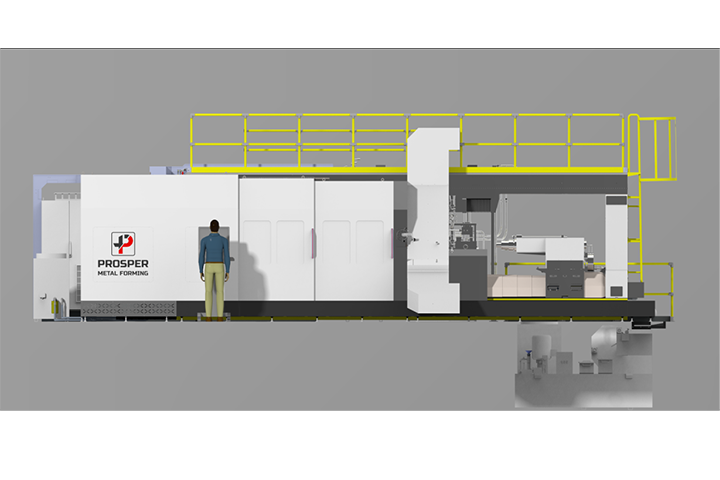
From Repair to Protection: The Intelligent Leap in Spinning Machine Maintenance
Date: Apr,29 2026 View:
From Repair to Protection: The Intelligent Leap in Spinning Machine Maintenance As heavy-duty equipment that operates continuously, spinning machines are subject to sudden failures that can bring entire production lines to a halt, causing delivery delays and skyrocketing costs. The traditional “break-fix” model can no longer meet the stringent demands for stability and controllability required by intelligent manufacturing. The integration of digital twin and predictive maintenance technologies is elevating equipment management to a new level of “proactive early warning,” embedding the DNA of “active maintenance” into high-end manufacturing production lines. From Repair to Protection: The Intelligent Leap in Spinning Machine Maintenance As heavy-duty equipment that operates continuously, spinning machines are subject to sudden failures that can bring entire production lines to a halt, causing delivery delays and skyrocketing costs. The traditional “break-fix” model can no longer meet the stringent demands for stability and controllability required by intelligent manufacturing. The integration of digital twin and predictive maintenance technologies is elevating equipment management to a new level of “proactive early warning,” embedding the DNA of “active maintenance” into high-end manufacturing production lines. By deploying multi-dimensional sensors—including vibration, temperature, current, and acoustic emission—on the physical spinning machine, the system captures over 200 operational data points in real time, covering spindle bearing wear, spinning roller guide clearance, hydraulic system pressure, lubrication status, and more. These data are used to construct a 1:1 digital twin model of the physical equipment. This “virtual twin” not only reflects real-time equipment status but also simulates how the equipment evolves under different operating conditions, making hidden failure risksvisible, measurable, and actionable. When the system detects an abnormal increase in spindle vibration frequency, it instantly cross-references the “fault signature library” embedded in the digital twin model, delivering a72-hour advance warningof potential bearing failure, along with precise replacement recommendations and real-time spare parts inventory information. This means that before equipment issues even arise, the maintenance team has already taken the initiative—shifting from reactive emergency repair to proactive planning, ensuring that sudden downtime no longer becomes a production bottleneck. Real-World Case Study: A Leading Aerospace Components Manufacturer A aerospace components manufacturer had long struggled with unexpected spinning machine failures that caused delivery delays. After implementing the digital twin and predictive maintenance system, significant improvements were achieved in just six months: One Critical Warning Averts Major Loss:The system issued a 48-hour advance warning of abnormal spindle bearing wear. The maintenance team used a production gap to perform preventive replacement, avoiding a major failure that would have caused five days of downtime and saving over2 million RMBin direct economic losses. Unplanned Downtime Reduced by 60%: Average monthly downtime dropped from 15 hours to less than 6 hours, significantly improving overall production line utilization. Maintenance Costs Cut by 35%:By shifting from “scheduled replacement” to “on-demand maintenance,” spare parts consumption and labor costs decreased in tandem, saving nearly800,000 RMBin annual maintenance expenses. On-Time Delivery Rate Increased to 98%:With enhanced equipment stability, order deliveries were no longer hindered by unexpected failures, resulting in significantly improved customer satisfaction. By leveraging AI algorithms for deep learning of historical fault data, the system continuously optimizes spinning process parameters. For instance, as spindle bearings naturally wear over time, the system automatically fine-tunes feed speed and pressure ratios to ensure consistent machining quality. Thisdual closed-loopof “equipment health” and “machining quality” keeps the equipment performing at its best throughout its entire lifecycle. From “reactive maintenance” to “proactive protection,” digital twin and predictive maintenance technologies are redefining the operational logic of spinning equipment. They protect not only the health of the equipment itself, but also the stability of production lines, the reliability of product quality, and the confidence of on-time delivery—building a solid foundation for the era of intelligent manufacturing. When equipment learns to predict the future, manufacturing gains true control.
By deploying multi-dimensional sensors—including vibration, temperature, current, and acoustic emission—on the physical spinning machine, the system captures over 200 operational data points in real time, covering spindle bearing wear, spinning roller guide clearance, hydraulic system pressure, lubrication status, and more. These data are used to construct a 1:1 digital twin model of the physical equipment. This “virtual twin” not only reflects real-time equipment status but also simulates how the equipment evolves under different operating conditions, making hidden failure risksvisible, measurable, and actionable. When the system detects an abnormal increase in spindle vibration frequency, it instantly cross-references the “fault signature library” embedded in the digital twin model, delivering a72-hour advance warningof potential bearing failure, along with precise replacement recommendations and real-time spare parts inventory information. This means that before equipment issues even arise, the maintenance team has already taken the initiative—shifting from reactive emergency repair to proactive planning, ensuring that sudden downtime no longer becomes a production bottleneck. Real-World Case Study: A Leading Aerospace Components Manufacturer A aerospace components manufacturer had long struggled with unexpected spinning machine failures that caused delivery delays. After implementing the digital twin and predictive maintenance system, significant improvements were achieved in just six months: One Critical Warning Averts Major Loss:The system issued a 48-hour advance warning of abnormal spindle bearing wear. The maintenance team used a production gap to perform preventive replacement, avoiding a major failure that would have caused five days of downtime and saving over2 million RMBin direct economic losses. Unplanned Downtime Reduced by 60%: Average monthly downtime dropped from 15 hours to less than 6 hours, significantly improving overall production line utilization. Maintenance Costs Cut by 35%:By shifting from “scheduled replacement” to “on-demand maintenance,” spare parts consumption and labor costs decreased in tandem, saving nearly800,000 RMBin annual maintenance expenses. On-Time Delivery Rate Increased to 98%:With enhanced equipment stability, order deliveries were no longer hindered by unexpected failures, resulting in significantly improved customer satisfaction. By leveraging AI algorithms for deep learning of historical fault data, the system continuously optimizes spinning process parameters. For instance, as spindle bearings naturally wear over time, the system automatically fine-tunes feed speed and pressure ratios to ensure consistent machining quality. Thisdual closed-loopof “equipment health” and “machining quality” keeps the equipment performing at its best throughout its entire lifecycle. From “reactive maintenance” to “proactive protection,” digital twin and predictive maintenance technologies are redefining the operational logic of spinning equipment. They protect not only the health of the equipment itself, but also the stability of production lines, the reliability of product quality, and the confidence of on-time delivery—building a solid foundation for the era of intelligent manufacturing. When equipment learns to predict the future, manufacturing gains true control.